
We use cookies to give you a better browsing experience.
HAIR EXTENSION AFTERCARE
Care tips for lasting extensions. Following these aftercare guidelines helps maintain the quality and longevity of your extensions.
Washing
Washing too often is the quickest way to shorten the lifespan of your extensions.
To preserve natural oils, colour, softness, and longevity, only wash your extensions when absolutely necessary.
How Often to Wash
- Wash as infrequently as hygienically possible.
- Washing more than once every 3–4 months is not recommended and may reduce longevity.
Before Washing
- Gently detangle using a wide-tooth comb, starting from the ends.
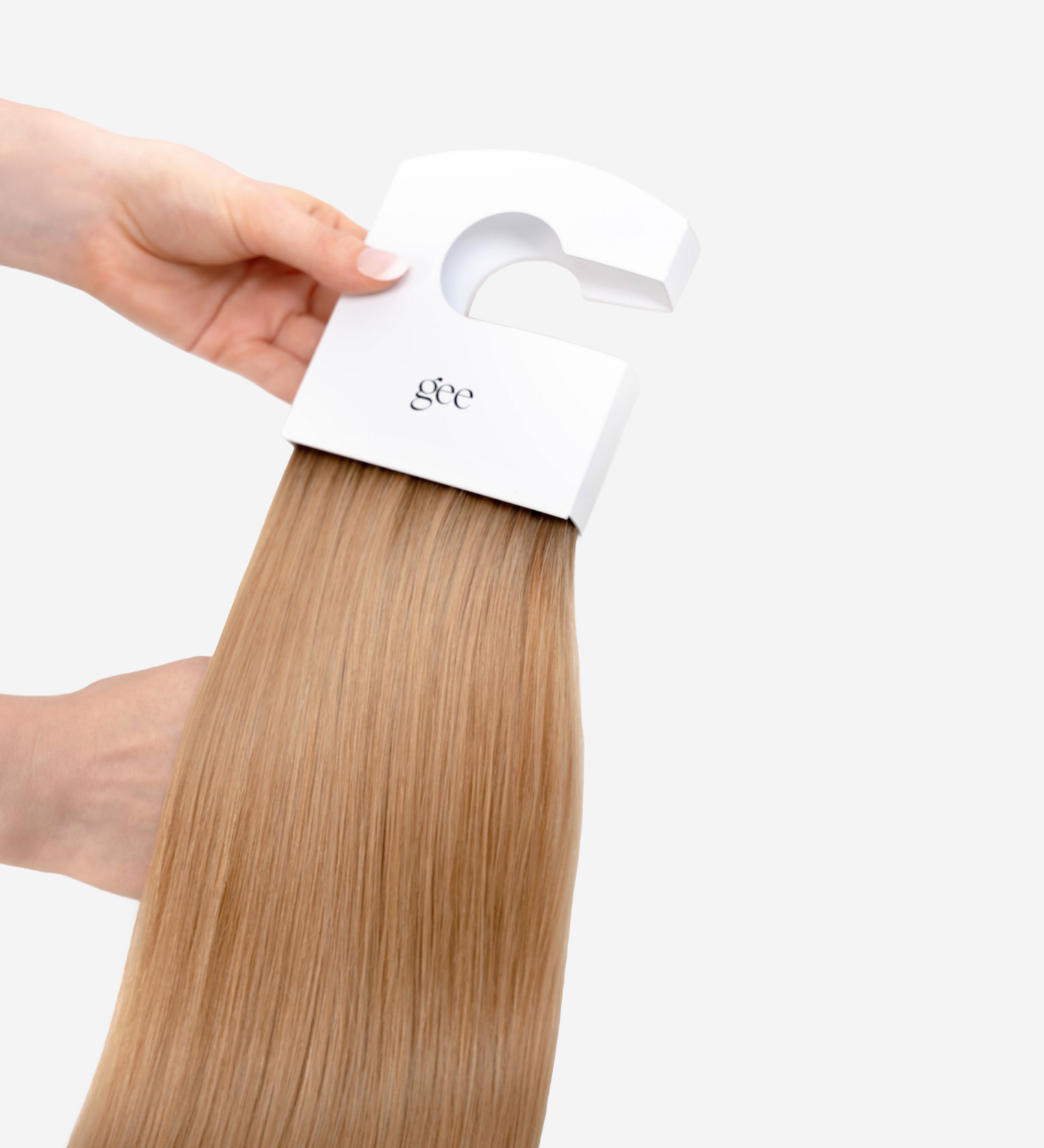
- Secure extensions in your Hair Extension Hanger to protect tracks and simplify washing. Watch our tutorial video for guidance.
During Washing
- Use hair extension-specific products only.
- Avoid soaking the tracks or clips, as excess water can cause shedding, peeling, or snapping.
- Apply a small amount of product to mid-lengths and ends only, avoiding the tracks.
- Rinse thoroughly to prevent product build-up.
After Washing
- Apply a hair mask and gently comb through to restore moisture.
- Air dry only to maintain quality and achieve our signature beach-wavy texture. Avoid towel-drying or blow-drying.
Refreshing Between Washes
- Instead of shampooing, use a conditioner or moisture mask to refresh the hair.
- Shampoo removes natural oils, which can affect colour and texture, especially darker shades.
Additional Care Tips
- Hang your extensions outdoors occasionally to air them between wears.
- Colour fading may vary due to natural hair porosity and is not considered a defect.
- Use a clarifying shampoo occasionally to remove build-up, using minimal product.
- Monthly moisture masks are recommended, especially if you heat-style or shampoo.
Styling
Styling too often with heat is the quickest way to shorten the lifespan of your extensions.
To preserve softness, colour, and longevity, minimise heat styling wherever possible.
How Often to Heat Style
- Heat style as infrequently as possible.
- Indian hair curls hold well due to its naturally wavy texture, so changing your style with heat every 3–4 months is ideal.
Temperature and Protection
- Limit heat styling to 120°C.
- Always use a heat protectant formulated for human hair extensions and choose tools with temperature control, as excessive heat can alter the colour.
- Pin curls in place until cool. This helps set the style without needing higher heat.
Protect the Tracks
Avoid applying direct heat to the tracks, as this can cause damage and reduce longevity.
Protect the Ends
- Avoid heat styling the ends whenever possible. The ends are the oldest and most delicate part of the hair, so they’re more prone to dryness and splitting.
- Trim the ends regularly to maintain freshness and keep the hair looking healthy.
Heat-Free Alternatives
- Explore heat-free styling methods such as curlers or setting styles overnight. View our tutorial video for guidance.
- Embracing the hair’s natural texture will also help preserve its quality long-term. View our tutorial video for guidance.
Tools and Handling
- Use your Hair Extension Hanger for styling assistance.
View our tutorial video for guidance. - Avoid using a radiator, as it can weaken and damage the hair.
Note
Curl retention in human hair extensions varies from person to person, depending on hair genetics.
Brushing
Detangling
- Hold the hair extensions below the tracks and gently detangle from the ends upward.
- Avoid brushing the extensions while they are attached to your hair, as this can pull on your natural hair and cause damage.
- Aggressive brushing, or brushing while the extensions are wet, can cause shedding and may damage the tracks.
Static and Brush Type
- Avoid plastic and metal brushes, which can create static. Instead, use boar-bristle brushes or wooden combs.
- Static hair can occur and is not a manufacturing fault. Anti-static sheets can be used to neutralise the charge and restore a natural look.
Products
Product Usage
- Use gentle products specifically formulated for human hair extensions.
- Hair extensions are delicate and no longer receive natural oils from the scalp, so they should be handled with care.
-
Hair extensions are delicate and no longer receive natural oils from the scalp, so they should be handled with care.
- To prevent product build-up, minimise the use of styling products and avoid heavy use of hair sprays and oils.
- Oils can coat the hair cuticle and trap moisture, which may lead to tangling and dryness over time.
Products to Avoid
Avoid using products on your hair, body, or face that contain ingredients that may alter the colour of your extensions. This includes sunscreens containing Avobenzone, tanning products, and certain creams.
Colouring
We strongly advise against altering the colour of your hair extensions, including the use of permanent or semi-permanent dyes, toning, or colour sprays. Our extensions have already undergone a colouring process, and further chemical treatments may produce unpredictable results due to the natural composition of the hair.
To maintain longevity and quality of the extensions, additional colouring treatments should be avoided. We cannot guarantee the outcome or condition of the hair if colouring is undertaken.
Colouring Guidelines
If you decide to colour the extensions against our advice, please follow these guidelines:
- Use your Hair Extension Hanger to support the hair while colouring, ensuring the tracks are avoided.
- Rinse the hair extensions beforehand to remove any product build-up or barriers.
- Avoid bleaching the hair extensions.
- Always perform a strand test first to check the colour result.
Cutting
Split ends are a natural occurrence and may develop over time on human hair extensions. If necessary, the ends of the extensions can be lightly trimmed to maintain a neat and healthy appearance. We recommend having any cutting or trimming carried out by a professional stylist experienced with hair extensions to ensure the best results.
Storage
Ensure your hair extensions are clean and completely dry before storing, as product build-up and moisture can damage the hair over time. Use your Hair Extension Hanger or Storage Bag with netting to keep the extensions tangle-free and protected. Store them away from direct sunlight to help prevent colour fading.
Retain the storage bag provided with your extensions, as it contains a unique code linking your set to its production batch. This code is required to validate your guarantee, and without it we are unable to process any claim.
Sleeping
We strongly advise against sleeping with your hair extensions clipped in, as this can cause strain on your natural hair and scalp, potentially leading to breakage, thinning, or hair loss. To protect both your extensions and natural hair, it is best to remove them before bedtime.
Swimming
Avoid exposing your hair extensions to chlorine or saltwater, as these can degrade the quality of the hair and may contribute to shedding if the water penetrates the area where the clips attach to the tracks.
Fact
Chlorine and saltwater strip the extensions of natural oils, colour, and moisture, leaving the hair dry, discoloured, and difficult to manage.
Weather
Hair extensions require extra attention in warmer climates, as sun exposure can fade or alter colour, cause breakage, reduce elasticity, create split ends, and diminish shine.
Avoid wearing hair extensions in extreme weather conditions, such as storms, as wind and rain can cause frizz, tangling, and matting.
Tip
Apply a UV protection product specifically formulated for hair extensions to help maintain colour and condition.
Handling
Handle the tracks with care. Avoid pulling or applying pressure when styling or brushing, as this can cause them to snap and reduce their lifespan.
Maintaining Colour
Hair extensions, like natural hair, can change colour over time. This is usually caused by external factors:
- Oxidation: Exposure to air and environmental elements can gradually alter the colour, sometimes creating a warmer or brassy tone.
- Heat Styling: Excessive heat, especially on the ends, can affect colour and cause fading or warmth.
- Products: Shampoos, conditioners, skincare, makeup, and sunscreens can react with the extensions and cause discolouration. Avoid sulphates and harsh chemicals, particularly sunscreens containing Avobenzone.
-
Sun Exposure: Sunlight can lighten the extensions and create warmth, especially in lighter shades.
- Water Quality: Hard water or high mineral content (such as iron) can affect the colour over time.
- Tanning Products: Tanning products can transfer onto the extensions, causing discolouration, particularly on the ends.
- Aftercare: Not following recommended aftercare, washing too frequently, or using unsuitable products may impact colour longevity.